

In today’s digital world, your business needs more than a great product or service. It needs an online presence. Whether you run a bakery, a consulting firm, or a local repair shop, customers are searching for you online. If they can’t find you, they’ll find your competitor instead.
The good news? You don’t need to be a tech expert to own a website. But you do need to understand the basic building blocks. This guide breaks down everything a small business owner needs to know to get started in plain, simple language.
Why Every Business Needs a Website
A website is your business’s home on the internet. It works for you 24 hours a day, 7 days a week even when you’re closed. It’s often the first place a potential customer will go to learn about you, read reviews, and decide whether to trust you with their money.
Without a website, you’re invisible to a massive audience of online shoppers and searchers. Studies consistently show that consumers research businesses online before making a purchase decision. A professional website builds credibility and helps you compete no matter the size of your business.
1. Domain Name – Your Website Address
A domain name is the address people type into their browser to visit your website for example, www.yourbusiness.com. It’s how customers find you online, so it should be easy to remember, easy to spell, and closely tied to your business name.
You register a domain name through a domain registrar companies like GoDaddy, Namecheap, or Google Domains. Domain names are typically rented on a yearly basis, costing anywhere from $10 to $20 per year for a standard .com address.
Choosing the right domain name is one of the most important steps when you decide to own a website. A strong domain name reinforces your brand and makes it easier for customers to find and remember you.

2. Web Hosting – Where Your Website Lives
If your domain name is your address, web hosting is the land your building sits on. Web hosting is a service that stores all your website’s files images, pages, code and delivers them to visitors whenever someone types in your domain name.
Not all hosting is created equal. Choosing a reliable hosting provider ensures your website loads quickly and stays online consistently. Slow websites frustrate visitors and hurt your search engine rankings. Look for a host that offers strong uptime guarantees (99.9% or higher), good customer support, and scalable plans as your business grows.
Popular hosting options for small businesses include Bluehost, SiteGround, and WP Engine. Monthly costs range from around $5 to $30 depending on the plan and features you need.

3. Website Design and Development
Your website design is the first impression your business makes online. A clean, professional layout signals to visitors that you’re trustworthy and serious about your business. Poor design, on the other hand, can send potential customers straight to your competitors.
Today, more than half of all web traffic comes from mobile devices. That means your website must be mobile-responsive meaning it adjusts and looks great on phones and tablets, not just desktop computers. Google also prioritizes mobile-friendly websites in its search results, making this a critical factor for your visibility.
Beyond looks, good website design focuses on user experience (UX). Visitors should be able to find what they’re looking for quickly and easily. Clear navigation, strong calls-to-action (like “Contact Us” or “Get a Quote”), and fast load times all contribute to a website that converts visitors into paying customers.
Working with a professional web developer is one of the best investments you can make when you want to build a website for business. A developer can customize your site, ensure it’s optimized for search engines, and build it on a platform that’s easy for you to manage long-term.
4. SSL Certificate and Website Security
Have you ever noticed that some websites start with “https://” and others just “http://”? That extra “s” stands for secure and it’s made possible by something called an SSL (Secure Sockets Layer) certificate. An SSL certificate encrypts the data exchanged between your website and your visitors, keeping information like contact forms and payment details safe.
Beyond security, HTTPS builds trust. Browsers like Chrome actually warn users when a website is not secure which can immediately drive visitors away from your site. Google also uses HTTPS as a ranking signal, meaning a secure website can help you rank higher in search results.
Most reputable hosting providers include a free SSL certificate with their plans. Make sure yours is active before your website goes live. It’s one of the simplest yet most important website basics you shouldn’t overlook.
5. Website Maintenance and Updates
Owning a website isn’t a one-time task it’s an ongoing responsibility. Websites need regular maintenance to stay secure, fast, and relevant. This includes updating software and plugins, refreshing content, and monitoring for any technical issues.
Regular backups are essential. If something goes wrong a hack, a server issue, or an accidental deletion a recent backup means you can restore your site quickly without losing everything. Many hosting providers offer automatic backups, or you can use a plugin to handle this.
Keeping your website updated also signals to both visitors and search engines that your business is active and trustworthy. Outdated content or broken links can hurt your credibility and your search rankings. Plan to review and update your website at least once a month.
Cost of Owning a Website
One of the most common questions small business owners ask is: how much does it cost to own a website? The honest answer is it depends. Here’s a rough breakdown of what you can expect to invest:
- Domain name: $10–$20/year
- Web hosting: $5–$30/month
- SSL certificate: Often free with hosting
- Professional web design and development: $500–$5,000+ (one-time)
- Ongoing maintenance: $50–$200/month (if outsourced)
While there are DIY website builders like Wix or Squarespace that keep costs low, a professionally designed and developed website will almost always outperform a template-based site especially when it comes to SEO, speed, and customization. Think of your website as a long-term investment in your business’s growth, not just an expense.
Conclusion
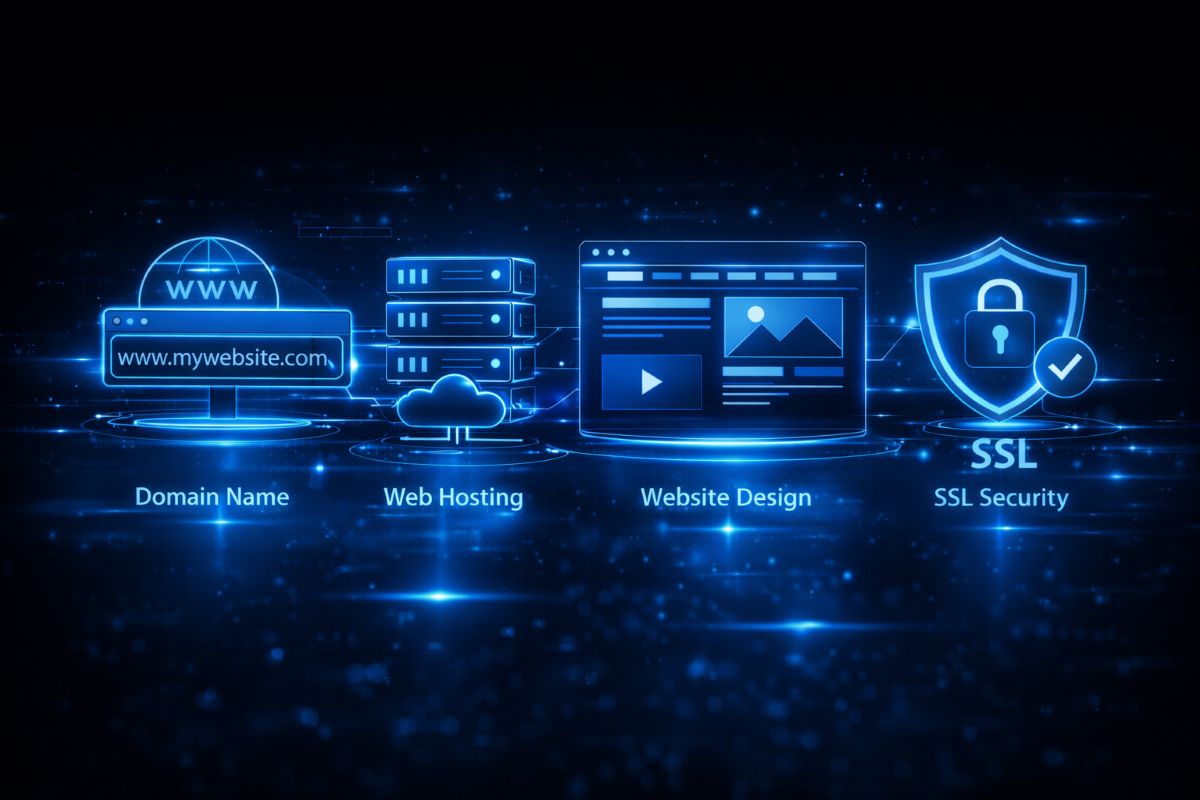
To own a website, you need more than just a pretty design. You need a memorable domain name, reliable web hosting, a professionally designed and mobile-friendly site, an SSL certificate for security, and a plan for ongoing maintenance.
Each of these components works together to create a website that not only looks great but also performs well in search engines and builds trust with your customers. When done right, your website becomes one of the most powerful marketing tools your small business has.
Ready to own a website that truly works for your business? Working with an experienced web developer can save you time, avoid costly mistakes, and set your business up for online success. Reach out today to discuss your project and take the first step toward a stronger digital presence.

Mst.Shila Akter
March 18, 2026 at 1:32 pmGreat work, Shawon..This article is clear, informative, and very helpful for small business owners who want to understand the basics of owning a website. I really like how you explained technical concepts in simple language, making it easy for beginners to follow😊
Dr.partho protim Ghosh
March 22, 2026 at 7:15 pmGreat man you are really a gem
shawon is prowd of khulna and BN college
Aspen Lawrence
March 27, 2026 at 1:15 amNice
Pingback: hello world
333985
May 2, 2026 at 11:39 am无话可说,只是看看
333985
May 13, 2026 at 9:02 pmwish you all the best